My Philosophy
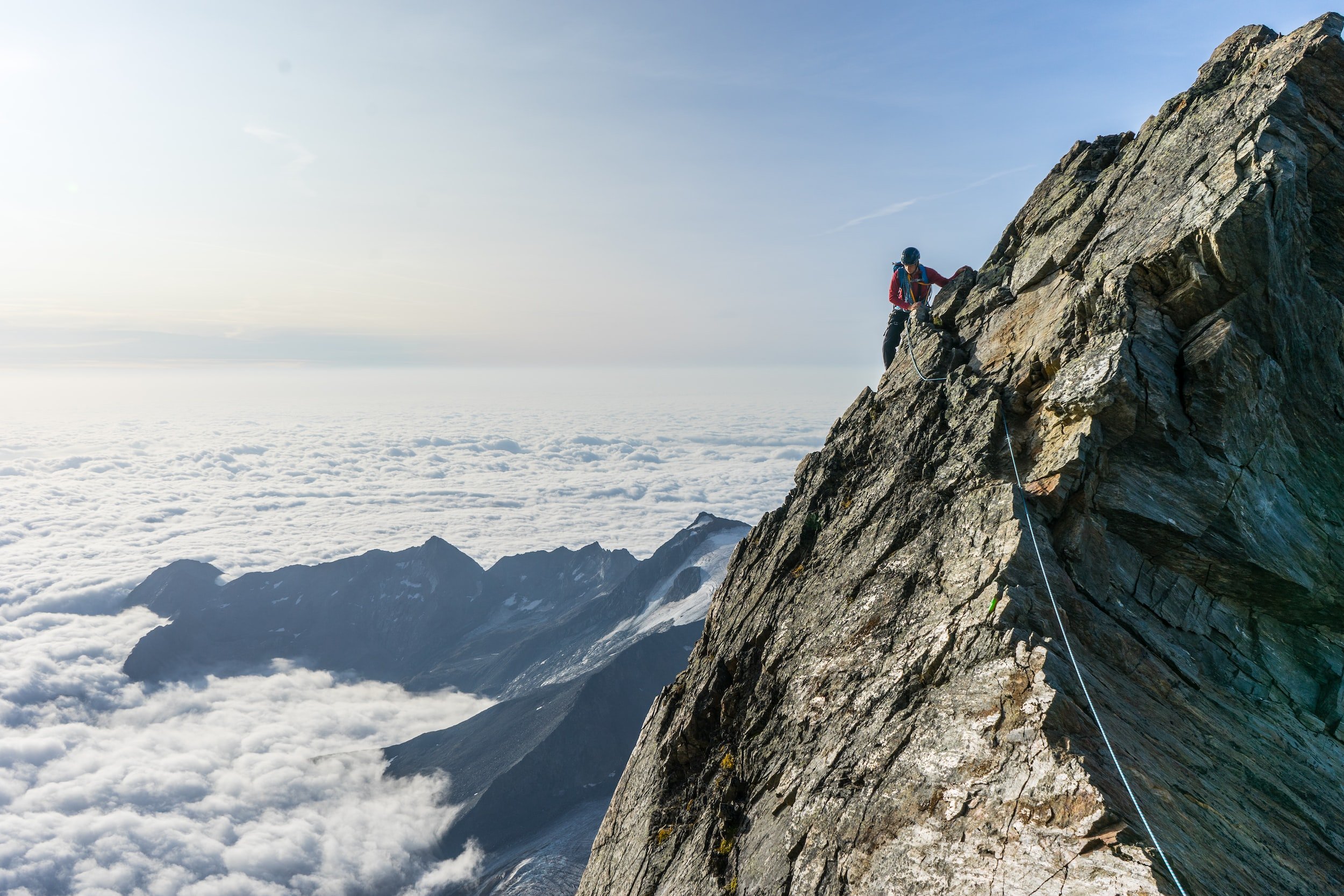
Photo Credit: @Jeff Willemyns
My Philosophy
If you are reading this it's likely that climbing means more to you than simply sport. It also means you are likely struggling with some level of fear or anxiety that is disrupting the joyful flow you love to experience while climbing. It can be incredibly frustrating and downright demoralizing when we are unable to enjoy something we deeply love and can't figure out how to fix the situation.
So I thought I'd write this page to offer my philosophy. I think you may find it unique, at least in the context of climbing and fear. Much of it has come out of my own experiences with fear while guiding and personal climbing over the past 20+ years. Over those years I have been training formally and informally, consuming every book, article, podcast, YouTube video, and course on fear, mindset and mental fitness that I could get my hands on. Out of that came a unique process that helps climbers manage unhelpful, irrational and overwhelming fear — one that mends the disconnection between mind and body so they can move in harmony and experience deep joy, presence and passion within climbing and life.
My basic take is this: if you experience fear while climbing, congratulations — you have a healthy survival instinct. We can't ignore the fact that climbing is relatively dangerous, and a healthy amount of fear keeps us safe and attentive. The problem arises when fear becomes unhelpful, irrational or overwhelming. The mistake many people make — and one I've made myself — is not recognizing the underlying cause of that escalation, and instead reacting by trying to "push down" or "push through" it. This is similar to bringing a young dog to the water and throwing them in out of frustration when they haven't taken to it the way you hoped. You're unlikely to build trust with a traumatized pup. You may have felt something similar if you've tried fall practice — for many climbers, it only deepens the fear rather than dissolving it.
So what's actually happening when fear takes over? This is where it gets interesting.
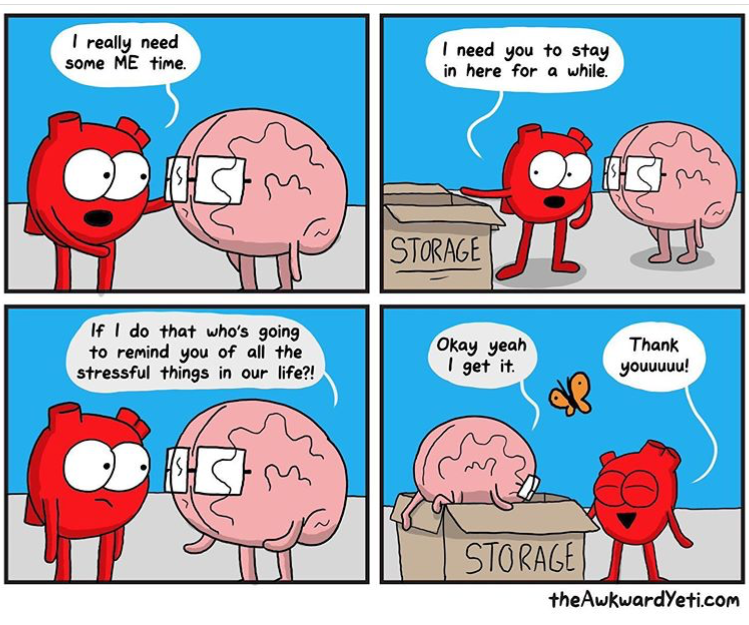
What I discovered working with guided clients, within my own climbing and through years of study, was a disconnect between our brain (our nervous system, our protector) and our heart (our passion, our joy). The brain is faithfully doing what it was built to do — keep us safe — while the heart longs for adventure and wants to push the edges. This creates a rift that, when ignored or simply unnoticed, leads to deep inner conflict.
Think of it this way.
Imagine you're taking a young child to ride a rollercoaster for the first time. From the moment you enter the park, the child is overstimulated — the noise, the crowds, the commotion. Walking toward the ride, they crane their neck up at the towering metal structure, eyes wide. Their inexperienced brain is overwhelmed. They want this — they've been excited about it — but they're scared, and they're showing it. So what do you do? You slow down. You explain how the ride works, how safe it is, how many people ride it every day. You remind them how proud and excited they'll feel afterward. You don't force them on. You wait for a yes.
And yet, oddly enough, we rarely do this for ourselves when fear shows up in climbing. More often we do the opposite — we berate and belittle ourselves. We feel shame, convinced something is "wrong" with us. Rather than support our concerned brain, we try to muscle through what it perceives as a genuinely dangerous situation. No wonder it floods the system and takes over.
To heal this rift and rebuild trust from the inside out, I've identified six key areas of focus.
The Brain — Our Protective Friend
Our brains haven't changed much in the past several thousand years. They are wired to constantly scan for threats and prepare to defend against them. This is the root of what's known as the negativity bias — a relentless tendency to find and fixate on every possible danger. It's not a flaw. It kept our ancestors alive. But in climbing, it can trap us in a loop that's hard to break out of without understanding what's driving it.
The Heart — Our Passionate Adventurer
There is something deeply human about the drive to explore, to test ourselves, to express who we are through the things we love. For those of us drawn to climbing, that pull is powerful. When we suppress it — when fear wins every time — life can start to feel flat and hollow. The heart needs room to move.
Mending the Rift — Compassionate Understanding
These two forces — protection and passion — are both valid. Both necessary. But when they clash without resolution, the inner conflict can become exhausting. What I've found is that patience and compassion are the bridge. Not forcing. Not fixing. Just bringing clarity and understanding so these powerful parts of our experience can begin to work together rather than against each other.
Challenge Response vs. Threat Response — Finding the Sweet Spot
Neuroscience, psychology and eastern wisdom traditions all point to the same idea: we each have a "window of tolerance" — the range of stress, fear and uncertainty we can process without shutting down. Beyond that window, we feel threatened. Within it, the same level of challenge can feel exciting, even enlivening. That window can be expanded over time, but only with practice — and only when there's enough heart/brain trust to make it feel safe to try.
Building Heart/Brain Trust — A Deepening Friendship
This is the heart of the work. Building trust in the context of climbing requires kindness, patience and consistency. The brain needs to know it's taking risks for good reason, and that the heart isn't going to drag it somewhere it can't handle. That trust is built slowly, in small steps — and it makes everything else possible.
Packing and Organizing Our Kit for Adventure
Our kit isn't just the gear (ropes, cams, chalk) or the technical training (anchor systems, rescue, first aid). It's also the collection of mental fitness and mindset tools we can reach for when things get challenging or unexpected. A well-stocked kit — inside and out — is what allows us to explore the edges of our comfort zones and have the wild, joyful, flowing experiences our hearts are after.
I believe this process is simple but genuinely powerful. But just because a process may be structurally simple, that doesn’t mean it’s easy. Think of me as someone who will walk with you to the ride — not throw you in the deep end.
Fear is not the enemy. It's a guide — one that's trying to keep you safe, teach you something, and point you toward what matters most. Climbing, at its best, pulls us into the present moment and helps us tune in to our bodies, our intuition, our inner knowing. That's a rare thing in an overstimulated world that rarely slows down long enough to listen.
What I believe we need — more than almost anything — is people living from their hearts, pursuing what they love with the intention of bringing something true and joyful into the world. Climbing is one pathway for me. I hope it can for you too.
If you're ready to move past the fear that's been holding you back and find out what adventures are waiting on the other side, I'd love to walk alongside you.
Cheers,
Bryan